Home Modifications
Find out whether changes to your home could improve access and daily activities.
An occupational therapist, or OT, assesses how you use your home and whether changes to an entrance, doorway, bathroom or another fixed part may help. Property permission, funding and building work require separate decisions.

Tell us which activity is difficult and where it happens. You do not need to choose a modification before contacting us.
What do you want to understand next?
When might a home modification assessment help?
An assessment may be useful when:
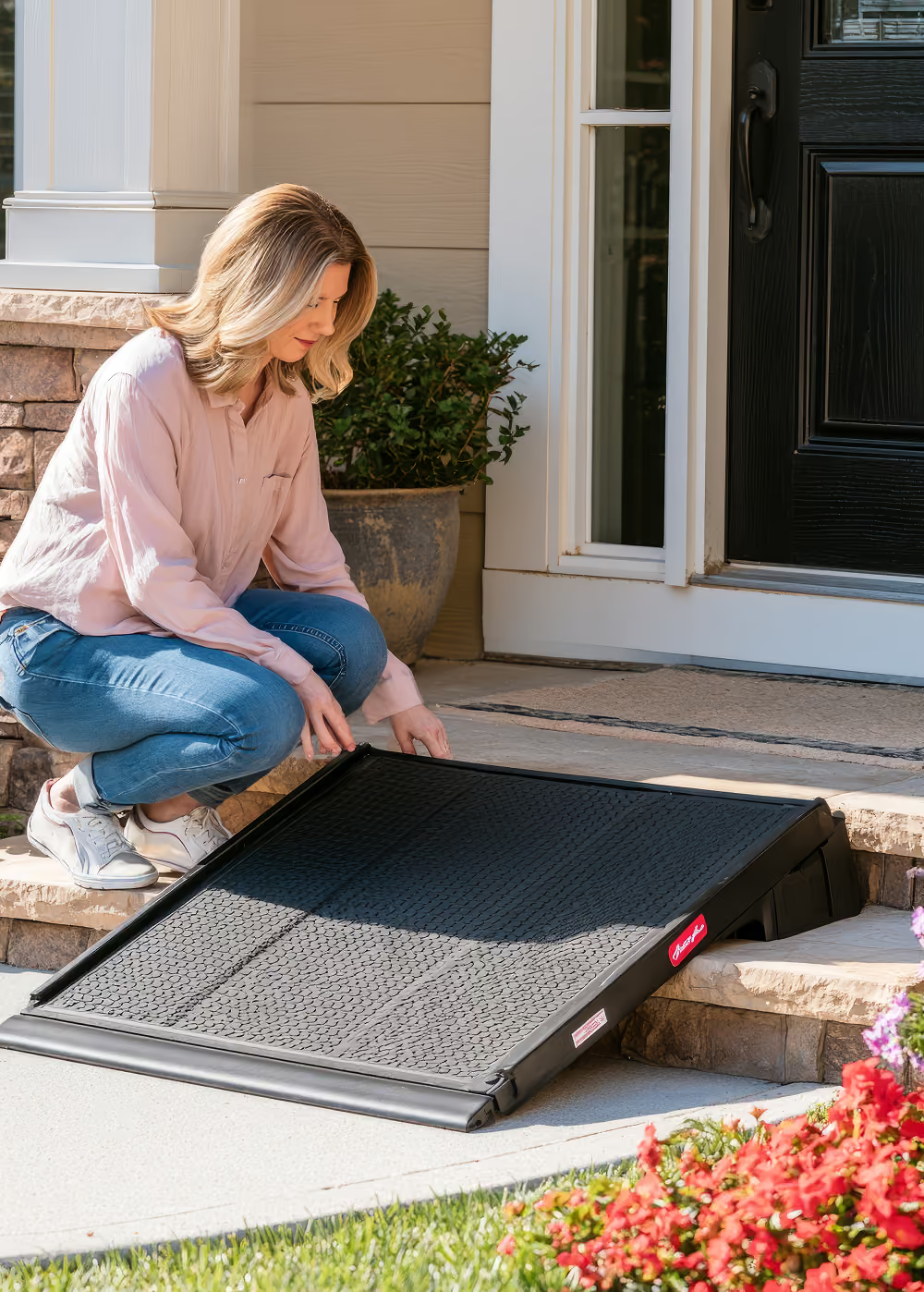
a step or entrance makes getting into the home difficult
a doorway or room layout restricts movement
the bathroom setup makes personal care difficult or unsafe
a fixed fitting or surface prevents an activity
existing equipment cannot be used safely in the space
an owner, builder or funder needs an OT recommendation.
For example, an older person finding a back step difficult may need the OT to look at how they enter and leave the home, including any equipment or help they use.
The assessment considers whether a change to the home is suitable or whether equipment or another approach may help.
See how this service applies to different stages of life.
What does the OT assess?
01
The person
Your goals, preferences, movement, communication, sensory needs, fatigue, health considerations and preferred support.
02
The activity
What you want or need to do, how it currently happens and where it becomes difficult.
03
The home
Access, measurements, surfaces, fittings, space to move, existing equipment and other people using the home.
The OT works within their training and professional scope. Depending on the findings, they may recommend a modification, equipment, further assessment or advice from a building professional.
Who is responsible for what?
01
The OT assesses everyday needs
The OT explains how a proposed change may help you use your home and may provide functional specifications. These describe what the change needs to allow you to do.
02
The relevant parties decide permission and funding
The owner or authorised property representative considers permission. The funder decides what it will pay for. The approvals needed depend on the property and funding arrangement.
03
Qualified professionals plan and complete the work
Building professionals or suppliers confirm technical requirements, feasibility and costs. The responsible provider completes approved work.
An OT recommendation does not authorise construction.
How does the process work?
- 1
Describe the activity and space
Tell us what is difficult, where it happens and what has already been tried.
- 2
Assess the current setup
The OT considers your needs, home, support and existing equipment.
- 3
Discuss possible changes
The OT explains whether a smaller change, more complex modification, equipment or technical advice may be appropriate. Sometimes no modification is recommended.
- 4
Confirm permissions and funding requirements
The responsible parties check the evidence, permissions, approvals and quotes needed.
- 5
Plan the work
Where the modification proceeds, the relevant professionals develop the technical design and costs.
- 6
Complete and review the work
The responsible provider carries out the approved work. OT follow-up is included when agreed and clinically useful.
Not every referral needs every stage. We confirm the OT assessment work before it begins; later approvals and building arrangements remain with the relevant parties.

Could another service help?
01
Equipment Prescription
When a removable item may help without changing the building.
Explore Equipment Prescription02
OT Assessment
When the everyday difficulty needs to be understood more broadly.
Explore OT Assessment04
Functional Capacity Assessment
When an NDIS decision needs a detailed assessment and report about everyday support needs.
Explore Functional Capacity AssessmentNot sure whether you need equipment or a home modification? Tell us what is difficult. Your OT can assess which option, or combination, may suit your needs.
What funding and property permission are needed?

For NDIS participants, the NDIA decides funding based on your plan, applicable home modification rules and required evidence.
Under Support at Home, equipment and home modifications have separate funding through the Assistive Technology and Home Modifications scheme. Approval is recorded in your Notice of Decision and support plan.
If you do not own the home, permission from the owner or authorised property representative may be needed. Private payment does not remove property, safety or building requirements.
If a registered Support at Home provider is arranging the work, see our service-specific assessment, pricing and referral information. The provider confirms the approved work and funding.
What does the OT assessment cost?
Our current therapy rate is
$193.99
per hour
What’s included?
Agreed OT work may include assessment, measurements, communication with other providers, reviewing findings, recommendations, reports and provider travel where applicable.
Building, supplier, design, certification, materials and installation costs are separate from the OT rate. We confirm the OT work before assessment begins. Builders and suppliers confirm their own quotes and terms.
How to get started
Select Start a Referral below. This opens our New Patient Referral form, which you can complete for yourself or someone you support.
Describe what is difficult or unsafe and which room, entrance or area is involved. Include equipment or changes already tried, who owns or manages the property, and any reports, approval requirements or deadlines.
We check whether the assessment is within our service scope, current availability and the information needed. We contact you or the nominated person to confirm the next step.
Our admin team confirms the paperwork and appointment. The OT assesses your needs, activities and home before recommending a modification, equipment, further information or another service.